Featured Pages
My Dear Mother: Twenty-five-year-old Captain David French's Letter to His Mother in Pearisburg -- Written the Same Day Union Troops Entered the Town
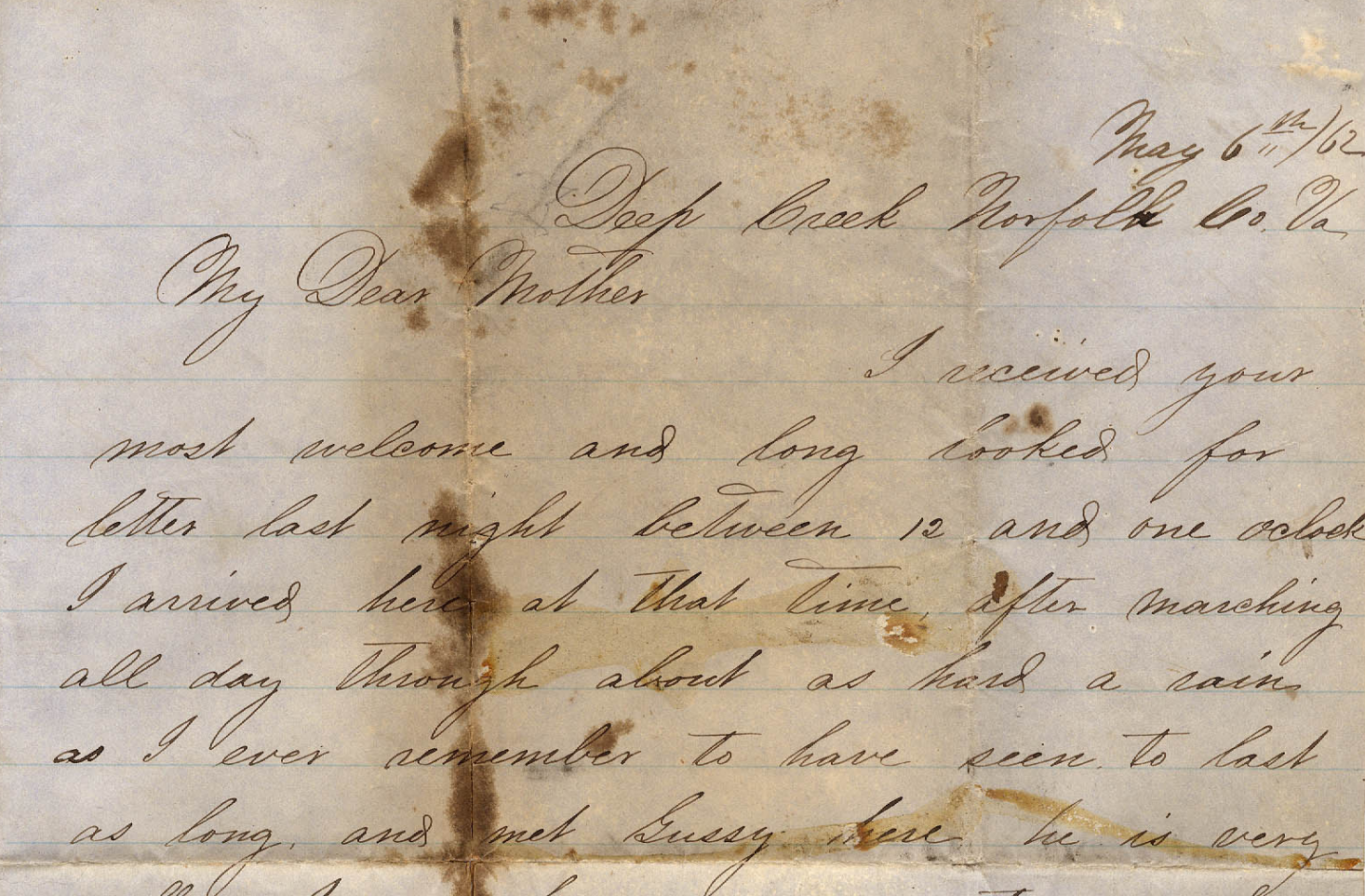
My Dear Mother,
I received your most welcome and long looked for letter last night between 12 and one o'clock....
Click here to read the rest of French's letter, published in the inaugural edition of the Johnston House Journal.
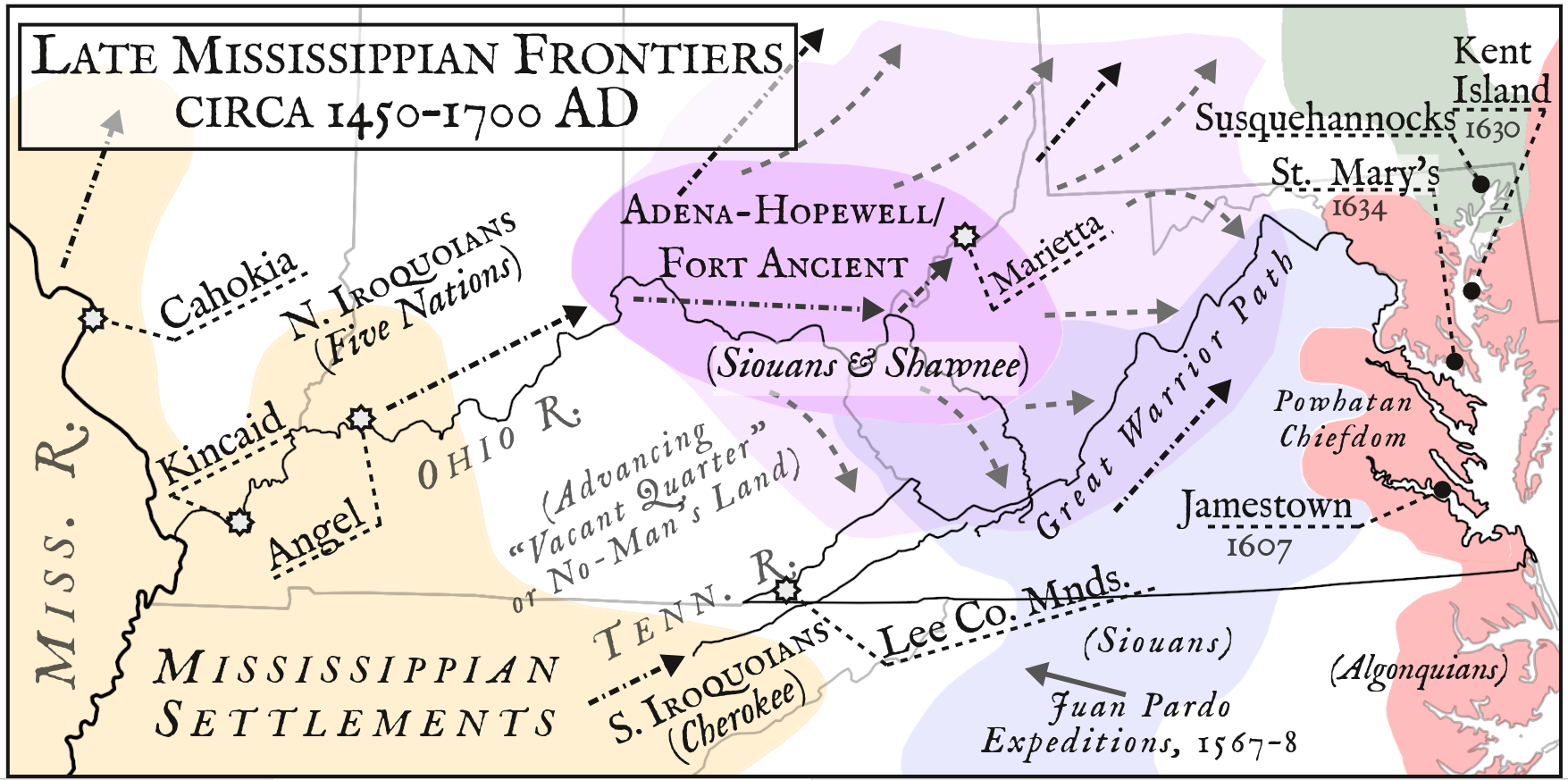
"Fort Ancient" Frontiers in Virginia--Prehistoric Ancestors of the Shawnee and Other Tribes
Other recent pages:
- Civil War: Arrest of Asa Anderson: A "Great Villain"
- Civil War: John Peck and His Co. See "Mysterious Objects"
- Revolution: Col. William Preston to Col. George Washington
News & Updates
Nov. 20, 2026. A page has been added for John Floyd the New River Valley pioneer, who led a very colorful life. He was an explorer, surveyor, officer in the Revolutionary War on the western frontiers, and founding father of Kentucky. He was with the group of surveyors on the Ohio River when Dunmore's War developed, and Col. Preston at Smithfield sent Daniel Boone to warn him to quickly return. Floyd's party of surveyors was attacked first, and Floyd traveled sixteen days before reaching British settlers at Clinch Mountain in the headwaters of the Tennessee River. Floyd helped rescue Jemima Boone in 1776, then served as a privateer against the British navy when the Revolution broke out. The British captured him and sent him to be imprisoned at Portsmouth, England, but Floyd escaped his confinement to France, where Arthur Lee and Benjamin Franklin were among those to assist him in returning safely to Virginia. He returned to fighting on the western frontiers with General George Rogers Clark, and in the process helped establish what became Louisville, Kentucky, as well as early settlements in Jefferson County, Kentucky, and elsewhere on those frontiers. He was appointed by officials in Virginia as one of Kentucky's first two judges. His son, also named John Floyd (who married Col. Preston's daughter Letitia), served as a representative, Governor of Virginia (1830 to 1834), and ran for the US presidency in 1832 as a Nullifier candidate, receiving a number of electoral votes that year but losing the election to Andrew Jackson.
Pages for the Echols, Buchanan, and McClaugherty families have also been added, as well as a page for Pocahontas, or Rebecca Rolf(e).
Nov. 16, 2026. Pages for the families of Walter Crockett (Wythe County's first Clerk of Court), Samuel Pepper (of Pepper's Ferry fame), Joseph Fletcher, and William Bowles are now online, along with a number of others. The page for George Pearis has expanded into an ongoing research project.
Nov. 14, 2026. Among many other recent changes, there is now a light/dark mode option. For those whose screens are a little too bright for reading, the dark mode can help ease eye strain. Many new family pages have also been added in recent days, including the Black family of Blacksburg. There are now county pages to which additional data will be added, and a New River version of the old Oregon Trail game is now linked in the colonial section.
Nov. 7, 2026. A search feature, long in the works, has been added to the home page. For now it only returns exact spellings of words and does not respond well to phrases or multiple keywords. Even as it stands, it should be a major convenience to researchers!
Nov. 5, 2026. The prehistory page has been revamped with additional information added on the primary ancestral cultures of the Shawnee. The page on prehistoric "Fort Ancient" groups and their relationship to the historic Shawnee is the first "featured" page where we hope to highlight the significance of time periods, frontiers, events, families, and people relevant to New River Valley genealogy and history.
Nov. 3, 2026. Wood's letter describing the adventures of James Needham and Gabriel Arthur is now up, along with early acts of the General Assembly regarding westward expansion and land rights. These documents offer important early testimony on western native frontiers leading up to Bacon's Rebellion in 1676, as well as information on some early Virginia pioneers.
Oct. 29th, 2026. Lots of landing pages for early families have been added to the family database, but there are still lots more to go. Pages for a few early governors and the Third Supply are also up, as many of Virginia's very earliest families arrived with that 1609 fleet (almost all of the original 1607 colonists already by then being dead). Additional primary source accounts will also be added in the coming weeks. The larger project is ambitious, but for a rolling start it's been a solid first month of progress.
Oct. 21st, 2026. We have discovered another Revolutionary War patriot line from Montgomery, Giles, and other counties of the New River Valley which is not noted in the 1970s Giles Research Committee's Families volumes: Andrew Reed and his descendants.
Oct. 18th, 2026. The section on prehistory now has pages on Paleoindians, Savannah River frontiersmen, the Fort Ancient people in Virginia, and also the historic Siouan and Shawnee tribes, including detailed maps of archaeological and linguistic distributions taken from Frontiers of the Lower James River, Part One. More information will be added to these pages as time goes on.
Oct. 15th, 2026. A transcription of the 1650 Bland and Wood Expedition, a page for the Draper's Meadow Massacre, and pages for the Jones and early Wood family are now added. The Bland Expedition involved Colonel Abraham Wood, who later sent Batte and Hallom from Fort Henry to do additional exploration in 1671. Almost a century later, the 1755 Draper's Meadow Massacre resulted in the death of Colonel James Patton, uncle of Colonel William Preston (then at Philip Lybrook's on Sinking Creek, helping him harvest a field), as well as the abduction of Mary Draper Ingles, who later escaped back to the New River.
Archived News and Updates
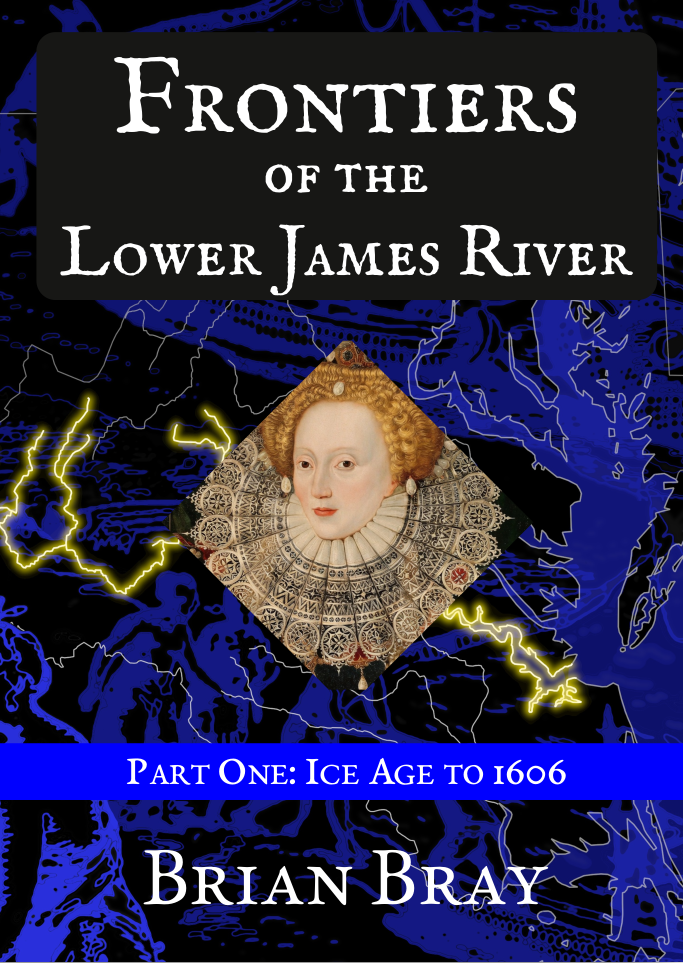
Frontiers of the Lower James River
Part One: Ice Age to 1606
The research into regional Native Americans and North American prehistory on this website summarizes more detailed research laid out in Frontiers of the Lower James River, Part One, which narrates Virginia's prehistory from the end of the Ice Age into the early colonial explorations and settlements of the Spanish, French, and English, stopping just short of Jamestown's 1607 founding.
|
Primary Source Collections
Colonial
Acts of the Assembly Encouraging Westward Settlement, 1642-1660
Journal of Edward Bland's Westward Journey, 1650
Journal of Batte and Hallom Expedition, 1671
Needham and Arthur's Adventures, 1673-1674
Revolutionary War
Dunmore's War Collection, 1774
Civil War
Civil War Letters of the New River Valley
Early County Records
Counties Page
Augusta County (Est. 1738)
Botetourt County (Est. 1770)
Fincastle County (Est. 1772)
Montgomery County (Est. 1776)
Wythe County (Est. 1789)
Grayson County (Est. 1793)
Tazewell County (Est. 1799)
Giles County (Est. 1806)
Floyd County (Est. 1831)
Pulaski County (Est. 1839)
Craig County (Est. 1851)
Wise County (Est. 1856)
Bland County (Est. 1861)
Johnston House Journal
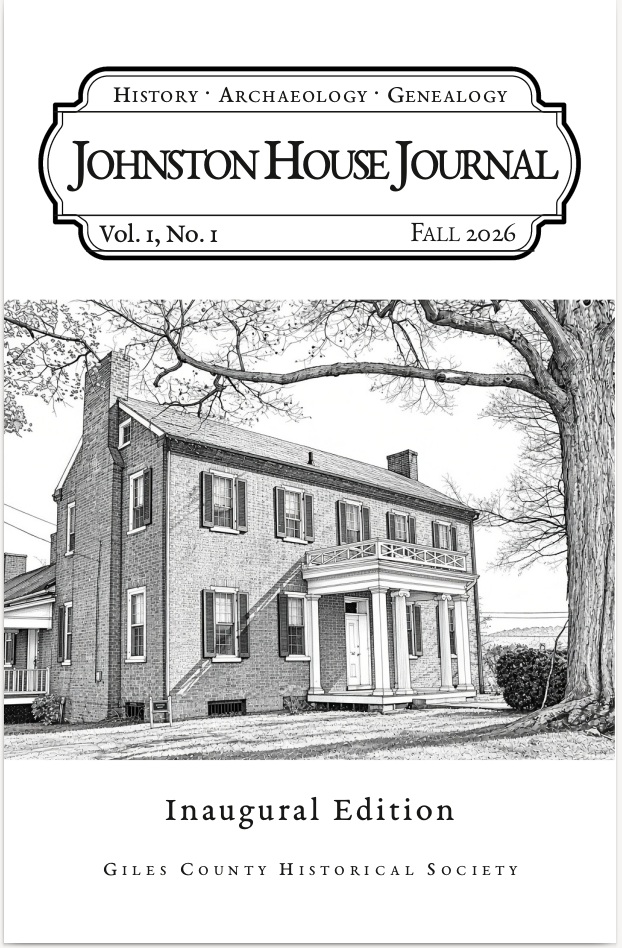
The inaugural edition of the Johnston House Quarterly is out. This is a quarterly publication mailed to members of the Giles County Historical Society. Read the latest articles online for free. If you would be interested in contributing an article on New River Valley history, archaeology, or genealogy, contact the webmaster.
Who Are You?

You are the result of historical processes that began long before you were born. Your life is the continuation of a family story, but what is that story?
Only a few in any family typically go to any effort to preserve and pass down their ancestors' memories, stories, and legacies. Those who do make that investment tend to already appreciate how their lives can be enriched with this information. Just as an individual's memory is invaluable to live a fulfilling life, so discovering the stories of your ancestors can also offer that kind of value that puts your whole life in a new perspective. Careful tracing of existing records can unlock your opportunity to better understand yourself and those closest to you within larger flows of society and history. Genealogy can seem to reveal everything from common mannerisms, dispositions, or interests stretching back centuries in a family, to common causes of death within the line.
Whether we knew them or not, all of us descend from centuries of people who did amazing things. For every parent, there are two grandparents, four great-grandparents, eight great-greats, and so on, so that within as little as 500 years or so one may have inherited ancestry from more than 1,000 direct ancestors. Among those hundreds of direct ancestors by the Renaissance Era, it is very likely that more than a few were well-known enough to have made it into more extensive records than merely births, marriages, and deaths, and in many cases these deep ancestors were members of the clergy, nobility, or other privileged class about which additional information is usually available going into even more remote epochs. Many others are likely to have been soldiers, sailors, traders, and of course (especially in Virginia's colonial history) farmers, but even they have interesting stories to tell.
One interesting individual I found in my own family tree was a man named Edward Waters, an early Jamestown colonist who was involved in the 1609 shipwreck of the Sea Venture on Bermuda. When factional fighting broke out between the would-be colonists and sailors on the island, Waters allegedly struck one of Newport's sailors in the head with a shovel, killing him. Condemned to death and tied to a tree to await his hanging the next morning, his colonist friends cut him down during the night and he escaped into the island, where Captain Newport eventually left him behind. Through a bizarre series of events, Waters discovered an enormously-valuable chunk of ambergris (whale fat), became the first English Governor of Bermuda (actually the only Englishman then alive on the island), and later arrived back in Virginia not as a servant but as a prominent land owner thanks to his ambergris and despite his former murder charges. An early founder of colonial Nansemond communities, the Nansemond tribe of Algonquians (a member tribe of the Powhatan Chiefdom) kidnapped him during the First Anglo-Powhatan War but did not harm him, ransoming him back to officials Jamestown as that conflict drew to a close. Acting-governor John Pott appointed Waters commander of Elizabeth City (present-day Hampton) in the late 1620s, making him a member of the colonial council.
Historical figures in Virginia as early as Waters left behind many generations of children who married into many other families to became ancestral to more American families today than commonly appreciated. It is difficult to imagine what one might discover in one's family tree until the work is actually commenced and the details are dug out to light. Claim your own report or just have us try to resolve a research problem for you from our genealogical services page.
Become a member of the Giles County Historical Society for $35 per year and receive a free genealogical lead and 4 issues of the Johnston House Journal annually with your membership.
Other Historical Resources
Aside from NewRiverGenealogy.org, you might also find useful historical and genealogical information at the following online resources:
New River Notes -- Website of the Grayson County Historical Society since 1998.
Wilderness Road Regional Museum -- Official website of the Wilderness Road Museum, dedicated to the early foot and wagon path by which thousands of migrant families came westward through the Appalachian Mountains.
Historic Smithfield -- Official website of the Smithfield Plantation, former residence of Revolutionary leader William Preston.
New River Heritage Coalition -- A local government-sponsored coalition of regional historical and cultural resources.
|