End of the Ice Age in the New River Valley
The New River is old beyond the reckoning even of modern geologists (who say it has survived at least five glaciation cycles or ice ages), but the first modern humans seem to have appeared in the valley only as the most recent, Pleistocene "ice age" was coming to an close. Massive flooding and erosion came from melting glaciers and permafrost along with other environmental changes. The Chesapeake Bay also formed at the close of the ice age, as the Paleo-Susquehanna Valley flooded more than two hundred feet over the continental shelf to flood inland more than sixty miles to where the bay exists today. Before this flooding, Paleo-Susquehanna River flowed all the way out to the continental shelf before entering the Atlantic. There were also people living this far north during these colder times, as evidenced at sites such as the underwater Cinmar Site near the continental shelf and the Meadowcroft Rock Shelter on what is now Pennsylvania's border with West Virginia, not far from where the Ohio River's channel was carved during the Younger Dryas. Archaeologists broadly call these earliest people Paleoindians, and their more specific expressions include the Clovis and Folsom cultures, named for discoveries in New Mexico which have analogues all over the continent.
The New River appears to have been cold, and had different kinds of plants and animals living along it, but was otherwise similar in appearance during the Pleistocene as today. The cataclysmic flooding of what geologists call the "Younger Dryas" environmental transition changed its final destination, however. The New had formerly drained into the Teays River, but the flooding running down from the glaciers destroyed that river by carving an entirely new channel which became the modern Ohio River. Many other parts of the Mississippi watershed transformed similarly during this transition period, and the Mississippi itself swelled to such levels it on modern maps it would appear like an inland sea and Louisiana's bayous were completely submerged for a time. The Teays River had run roughly across the middle of the modern-day state of Ohio, including by Newark (the site of a massive earthworks complex), which is now drained into the Ohio by the Muskingum River.
The surge of meltwater eventually receded, and within a few centuries not only forests but deciduous forests of four distinct seasons were beginning to mature where permafrost had previously been. An abundance of new species of wildlife appeared for the first time as many older species went extinct in the region. New migrants also came into these newly-thawed environments, sometimes integrating into pre-existing Paleoindian communities and sometimes establishing new villages in relative isolation. first appeared in the Savannah River Valley in what is today the Georgia-South Carolina border region. Frontiersmen of those early people came to Virginia with distinct stone toolkits, imported soapstone bowls, and then the earliest clay pottery-making traditions to appear in prehistoric Virginia. They established communities all along the Roanoke, James, Rappahannock, Potomac, Shenandoah, and New rivers, among many others. These early migrants in the NRV used Savannah River points, Radford- and New River-type pottery traditions (among others), and established villages with connections through marriage to related communities in neighboring valleys.
|
Prehistoric Eras
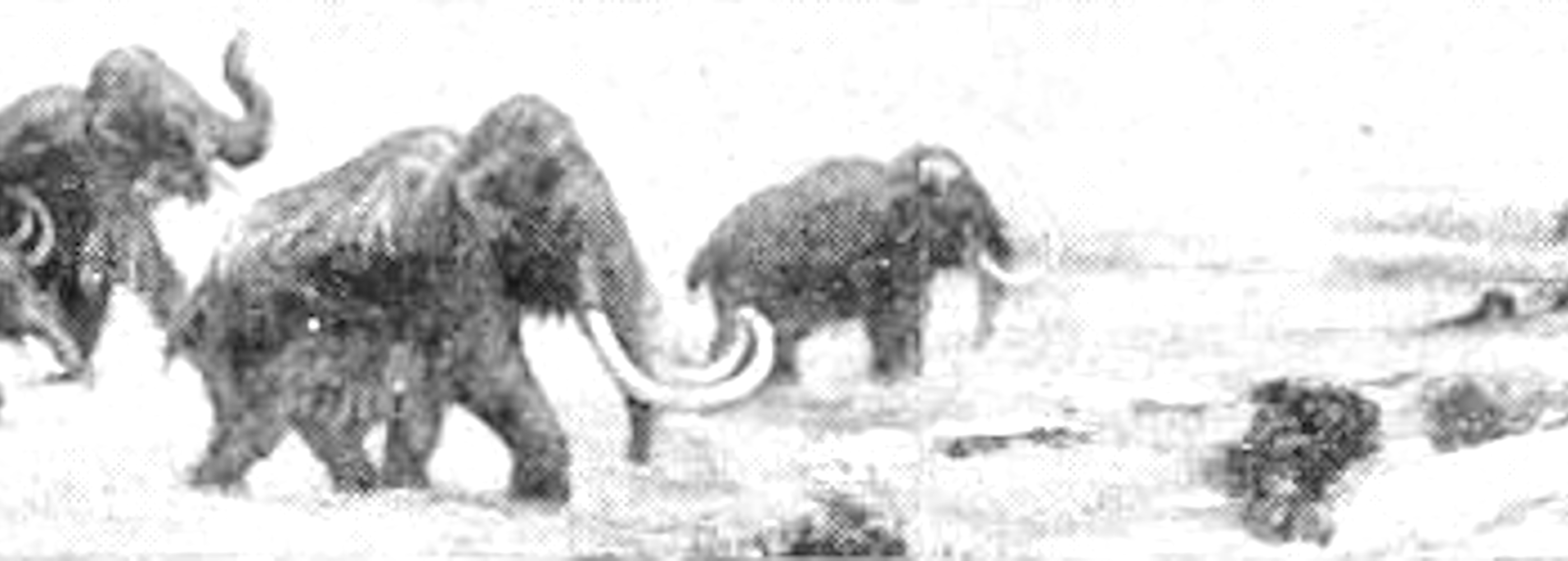
Paleoindian Frontiers - The earliest known cultures to cross Virginia at the close of the last "ice age" or glacial maximum, also known to geologists as the late Pleistocene, Younger Dryas, and early Holocene eras.
Early Savannah River Frontiers - The first distinctive, non-Paleoindian culture to appear east of the Mississippi was that of the early Savannah River people. They created the earliest known burial mounds (out of discarded shellfish), the earliest known pottery on the East Coast, and atlatl points called Savannah River points.
Old Copper Frontiers - Early formation and migrations of the Old Copper people, immediate ancestors of Red Ocher, Glacial Kame, and Meadowood cultural complexes, and more distant ancestors of historic Western, Central, and Eastern Algonquian-speaking tribes, respectively.
Adena-Hopewell Frontiers - The most elaborate mound-building cultural complex of the prehistoric Ohio Valley, whose era of monumental earthwork creation seems to have come to an abrupt end when Mississippian migrants began coming up the Ohio.
Fort Ancient Frontiers - When the Adena-Hopewell mound-builders began fleeing upstream and into the mountains (including up the Kanawha into the New River Valley and Southwest Virginia), archaeologists refer to their hilltop fortifications and related sites as the "Fort Ancient" culture and its people. The very name of these people suggests the resistance they put up again enemies which, by the protohistoric era, probably included early Spanish and French explorers in some regions.
Fort Ancient in Virginia - Sites along the New River and adjacent regions evidencing late prehistoric migrations from the Ohio Valley into Southwest Virginia and beyond. These migrants became ancestral to many intrusive tribes onto the Atlantic Seaboard in late prehistory, including (by their own oral histories) the Shawnee, Lenape (Delaware), and core Powhatan tribes.
Mississippian Frontiers - The final cultural phase or frontier to cross Virginia during prehistoric times was that of Mississippian peoples such as the Cherokee and Northern Iroquoians, both of whom spoke Iroquoian languages. More southwestern Muskhogean-speaking tribes such as the Creek, Chickasaw, and Choctaw also belonged to the prehistoric Mississippian cultural continuum.
|